
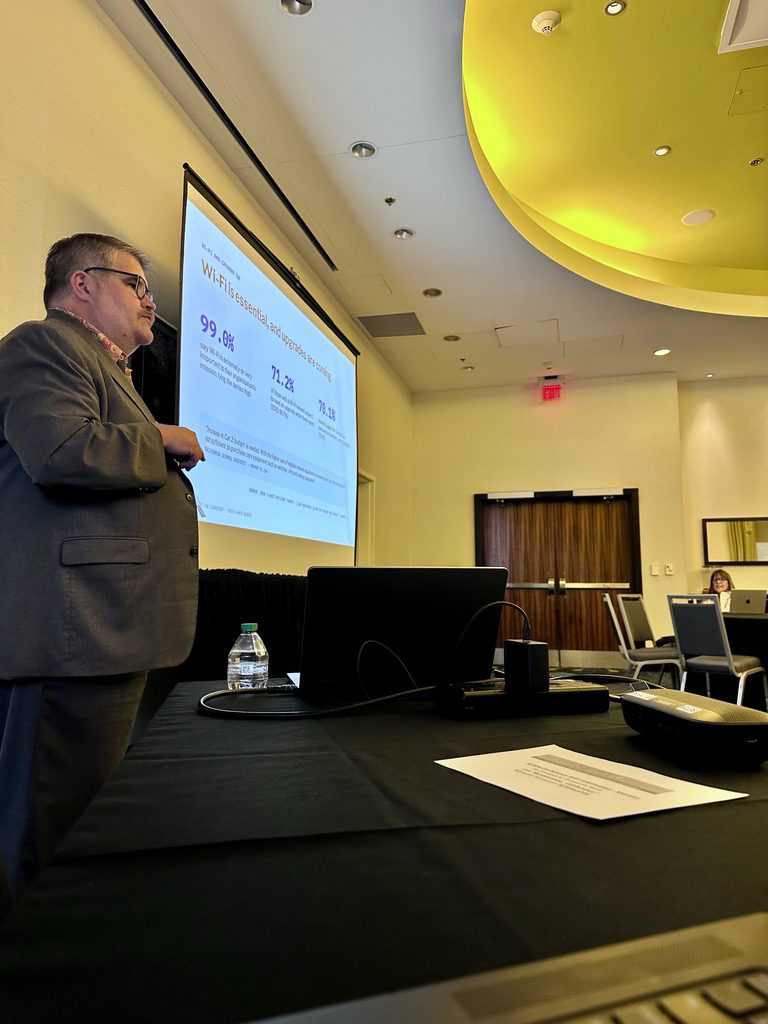
Last week, Brian and I sat down with state education technology leaders at the SETDA Leadership Summit, and two questions came up more than any others: how the new USAC bidding portal will actually work, and where the FCC’s rulemaking leaves E-rate. If those are on your mind too, you have company well beyond your own district.
Who Is SETDA, and Why Does It Matter to E-rate?
The State Educational Technology Directors Association (SETDA) is the voice of the state officials who sit alongside E-rate applicants. Launched in 2001 by state education agency leaders, the nonprofit membership association celebrated its 25th anniversary this year. Its members are U.S. states and territories, represented by the people who lead educational technology, digital learning, IT, and, in many cases, E-rate coordination for their state education agency.
SETDA’s mission is to build the capacity of state and national leaders to improve education through technology policy and practice, from peer collaboration and research to a collective voice on federal issues, including E-rate. That makes its members important people to know: they support the schools and districts we serve, and they hear firsthand what is and isn’t working for applicants.
A Day at the Summit
Monday began with breakfast and opening remarks, followed by a keynote from Kevin Honeycutt on leading schools forward when the future gets complicated. The session was billed as a challenge to the false choice between traditional and digital learning, with students needing both books and playgrounds and AI literacy and computational thinking.
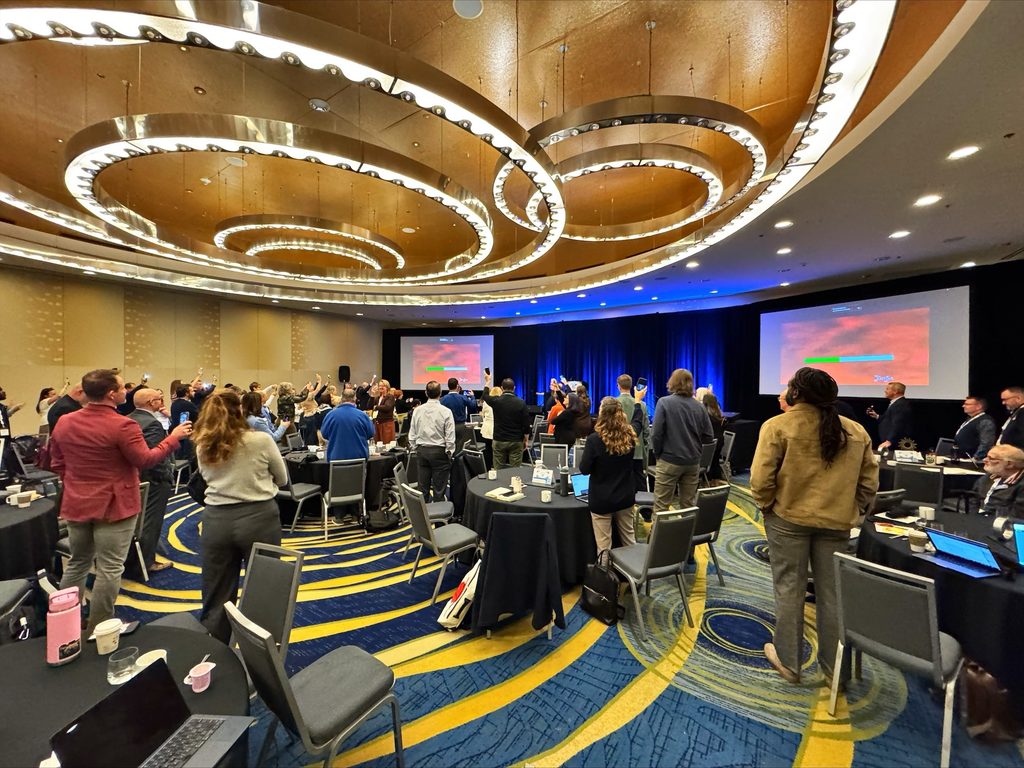
Navigating K-12 purchasing. The session that connected most directly to our work looked at how schools can reach technology through intermediary agencies, state contract vehicles, affiliates, and cooperative purchasing. It wasn’t an E-rate session, though there is real overlap. It was aimed mainly at vendors and the state agencies that help schools buy, and it showed how many avenues exist to make purchasing easier, more accessible, and more cost-effective than a school going out on its own.
Building relationships with SETDA. Another session was geared toward SETDA’s corporate members and summit sponsors, with advice on making the most of a relationship with state members.
Our Session: Sharing What Applicants Are Telling Us
Brian and I led one of the Summit’s focus group sessions, sharing findings from the FFL 2026 E-rate Trends Report. The room included more than a dozen state education agencies, along with regional and statewide education technology organizations, with roles ranging from directors of educational technology to digital learning and AI leads, a K-12 cyber policy coordinator, and a state E-rate coordinator.
The session gave us a chance to put applicants’ perspectives in front of the people who support them at the state level. We shared a selection of findings from the report, then opened the floor to the group for conversation about the trends and about the upcoming USAC bidding portal.
A slide on the rise in Category Two requests prompted some discussion. When Brian asked whether they were seeing similar patterns in their own states, the group agreed, confirming that the trend in applicant data matches what they see.
The bidding portal drew the most conversation. When I asked the group about it, attendees were eager to talk about how it will work in practice and what it may mean for the schools they support.
What We’re Taking Back
- E-rate is one piece of a larger purchasing picture. State agencies, intermediary organizations, and cooperative contracts all shape how schools buy technology. Understanding those pathways helps us serve applicants whose procurement decisions begin well before a Form 470.
- Everyone wants to know where E-rate is headed. Over and over, attendees asked how we felt about the FCC’s rulemaking, whether we thought the program might go away, and whether we were optimistic or concerned about the conversation around it. Those questions came from people who work closely with schools, which tells us how much attention the proposals are getting beyond the E-rate community itself.
- The bidding portal is on everyone’s mind. It was the topic that got our session talking. Applicants, consultants, and state leaders are asking the same questions about how it will work, and we expect to keep asking them together.
- Showing up matters. Several people already knew Funds For Learning, and many came over simply to thank us for our continued support of E-rate and K-12. It was encouraging to hear, and a good reminder of why we join these conversations.
Looking Ahead
We left the Summit with a few new relationships, a deeper appreciation for the state leaders who support schools behind the scenes, and a clearer sense of the questions on everyone’s mind. The questions we heard there are the same ones we hear from applicants every week, and right now there is a place to put them on the record.
Reply comments to the FCC’s rulemaking are due November 12. Funds For Learning has already filed comments, and you can read more in what we told the FCC about E-rate’s future. To add your voice, file a reply comment through the FCC’s Electronic Comment Filing System (ECFS) under Docket 26-133. Schools and libraries know better than anyone what E-rate makes possible, and this is the moment that perspective belongs in the record.
About the Author: Eric Jester is an E-rate Guide at Funds For Learning. He joined 16 years ago, drawn by a long-held belief in the importance of education and a desire to put his analytical skills to work in communities that benefit from them. Eric leads and develops Guides on one of the Guide Teams, building the processes, alignment, and capacity that let Funds For Learning support clients well. Outside of work, you’ll find him with his wife and daughter (living the cheer dad life), traveling when he can, and playing guitar when time allows.