
For many schools and libraries, the E-rate year seems to begin when the FCC Form 471 filing window opens. In practice, the strongest applications begin months earlier. October is the time to confirm what your organization needs and build a realistic path from technology priorities to procurement and filing.
The EPC Administrative Window is part of that preparation, but it should not be the entire focus. A brief profile review establishes an accurate starting point. The larger opportunity is using the fall to make decisions early, coordinate stakeholders, and avoid rushed procurement work later.
Begin With the Outcome
Start by asking what your organization needs to accomplish in the upcoming funding year. Rather than beginning with forms, begin with the learning, operational, and infrastructure goals that will drive the request.
Current services: Are existing internet and data connections meeting demand? Are contracts expiring or service levels likely to change?
Network priorities: Are switches, wireless equipment, cabling, firewalls, or related components approaching replacement?
Organizational changes: Will new campuses, renovated spaces, consolidations, or staffing changes affect the project scope?
Budget strategy: What local funds are available, and how does the project fit within the organization’s Category Two budget?
Turn Needs Into a Procurement Plan
Once priorities are clear, work backward from the desired implementation date. Identify who will develop the technical requirements, who must approve the purchase, and whether a new FCC Form 470 will be needed. Early planning creates time to refine the scope, resolve open questions, and conduct a thoughtful competitive bidding process.
Useful planning questions include:
What problem are we trying to solve, and which locations are included?
Do we have an inventory, network map, or assessment that supports the proposed scope?
Which features are required, and which are preferences?
Who must review the specifications before they are posted?
What purchasing, legal, or board approvals must occur before a contract can be signed?
When must equipment or services be available to support implementation?
Use EPC Review as a Planning Checkpoint
Keep the Administrative Window review focused and practical. Confirm that enrollment or square-footage data, entity relationships, addresses, contacts, and user access reflect the organization as it exists today. Then connect those updates to the proposed project. A new site, closed building, or changed relationship may affect how services and equipment should be scoped in the application.
Maintain the records that support any updates, but do not let profile maintenance replace the broader planning conversation. The objective is not simply to finish an EPC checklist. It is to make sure the application will be based on accurate data and a well-defined need.
Build a Simple Fall Timeline
October: Confirm priorities, validate key EPC information, review contracts and budgets, and assign planning responsibilities.
November: Develop the project scope and specifications, gather stakeholder feedback, and identify required approvals.
December: Finalize procurement documents, prepare or post the FCC Form 470 when needed, and organize bidding records.
January: Resolve remaining questions and prepare funding requests using the decisions and documentation already assembled.
The Most Common EPC Errors
Every applicant is different, but a handful of issues appear year after year:
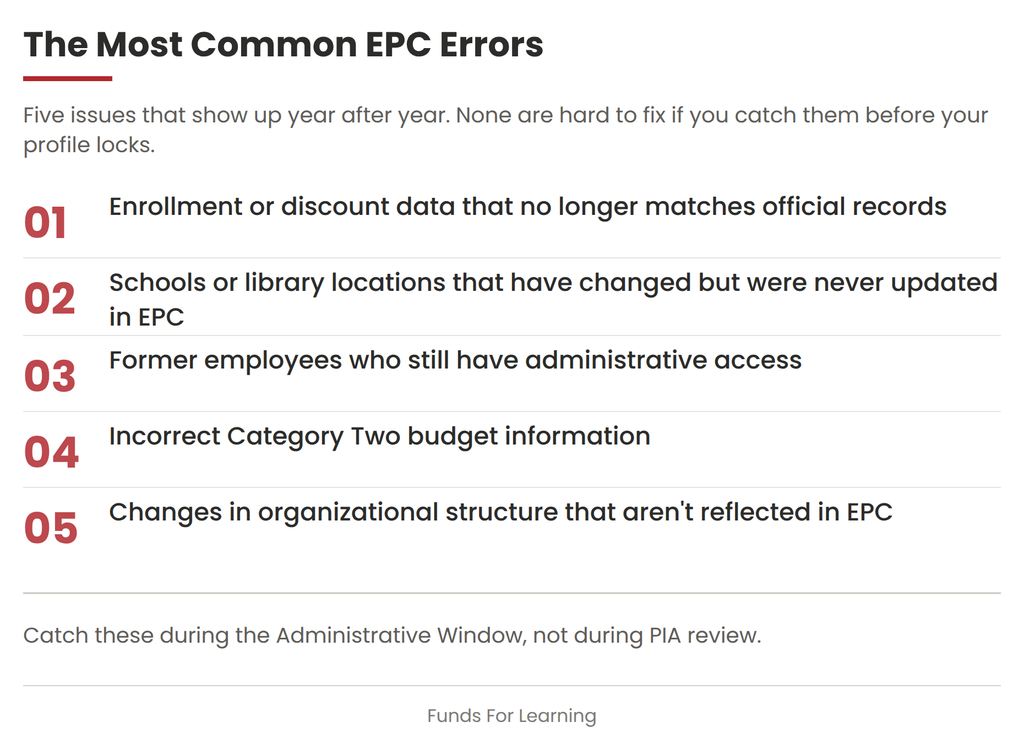
None of these are particularly hard to fix. The challenge is catching them before your profile locks for the funding year.
A Better Filing Season Starts Before Filing Season
A smoother January is the result of decisions made in the fall. When schools and libraries clarify needs, align procurement steps, verify key organizational data, and assign responsibilities early, the Form 471 becomes the final expression of a plan rather than the starting point for one.
The October 8 MEG lands just before the Administrative Window opens. Join us with your readiness and planning questions.
About the Author: Kimberly Beck is an E-rate Guide at Funds For Learning, where she helps schools and libraries build documentation habits that hold up under PIA review. Based in Oklahoma, she spends her time off the clock fly fishing.