

Choosing between BEAR and SPI is a decision every applicant has to make. In a recent article, we walked through the most common ways applicants get tripped up at invoicing. This decision is one piece of that broader picture, and it is worth a closer look on its own. The discount method is selected on the Form 471, and you will need to decide how you want to receive your discount. This has been in effect since the Funding Year 2026 filing window. E-rate offers two invoicing methods, BEAR and SPI. Both are widely used and effective, but they work in different ways, and the right choice depends on your organization’s needs.
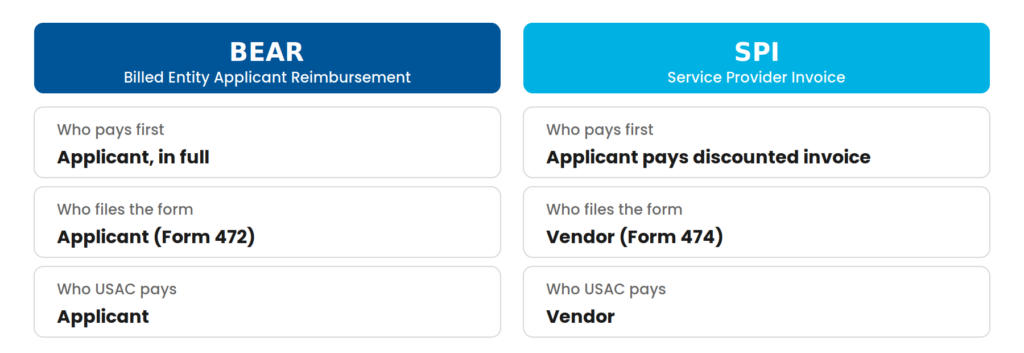
With the BEAR method (BEAR is short for Billed Entity Applicant Reimbursement), you start by paying your service provider in full. Once payment is made, you submit a BEAR (Form 472) in the E-rate Productivity Center (EPC) to request reimbursement for the approved discount amount. BEAR disbursements are paid electronically directly to the applicant. This method gives you more control over the process and can be used with any vendor. However, it does require you to cover the full cost upfront and wait for reimbursement, which can take time.
With the SPI method (or Service Provider Invoice), the process is more streamlined. Your service provider applies the E-rate discount directly to your bill, so you only pay your share. The provider then submits an SPI (Form 474) to USAC for the remaining amount, and USAC pays the provider directly. This option reduces your upfront cost and requires less effort on your end, but it relies on your vendor offering SPI and managing the invoicing correctly.
When deciding between BEAR and SPI, it often comes down to cash flow and how much control you want over the process. BEAR may be a better fit if you are comfortable paying upfront and want full visibility into invoicing. SPI may work better if you prefer a simpler process and lower out-of-pocket costs from the start.
No matter which method you choose, timing is critical. Invoices must be submitted by the Last Date to Invoice (LDI), which is 120 days after the latest of these dates:
- The last day to receive service
- The date of the Form 486 Notification Letter
- The date of the Revised Funding Commitment Decision Letter (FCDL) approving a post-commitment request or successful appeal
Missing this deadline can delay or prevent reimbursement.
In the end, both BEAR and SPI methods result in the same discount, but one will likely suit your organization’s needs better than the other. The key is to choose the method that fits your budget and internal process, coordinate early with your service provider, and stay on top of deadlines to ensure a smooth invoicing experience. If you are unsure which method makes the most sense for your district or library, your FFL Guide can walk through your specific situation with you.
Now that funding decisions are landing, invoicing season is here. Bring your situation to the next My E-rate Guides (MEG) webinar on Thursday, June 4. Register now.
About the Author: Neal Brautigan has been working on E-rate invoicing since joining Funds For Learning in August 2023. Over that time, he has supported multiple schools and libraries and handled invoicing at a variety of complexity levels. Outside of work, Neal enjoys playing guitar and spending time with his wife and daughter. He is based in Edmond, Oklahoma, though he is originally from Atlanta and has also spent time living abroad in Asia. Earlier in his career, Neal taught students of all ages, including at the university level, which helped shape his communication style and approach to client support.